

1939 New York World’s Fair Disney influence
Studying the history of theme parks and amusement parks and you quickly come to see how important the World’s Fairs were, especially the 1939 New York World’s Fair Disney influence . Disney fans hold the 1939 and 1964 New York World’s Fairs in high esteem for several reasons.
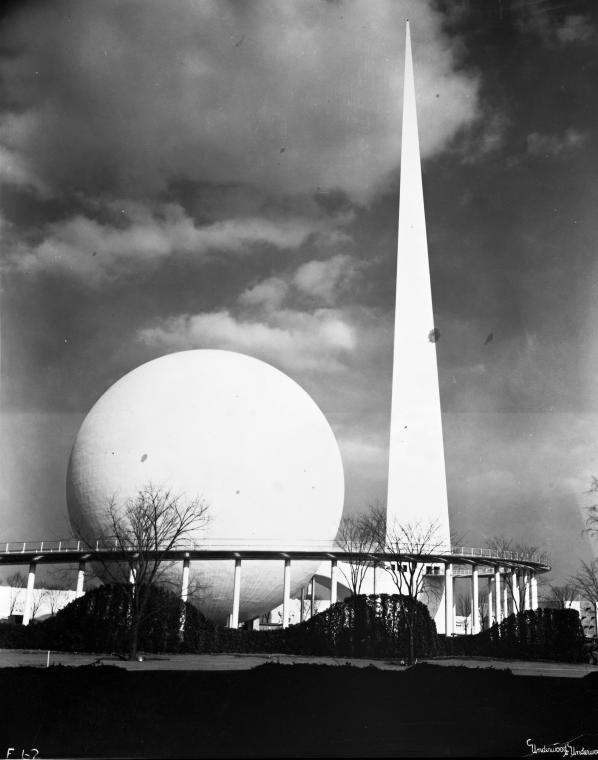
We know that Walt visited the Chicago Railroad Fair in 1948 with Ward Kimball, which influenced Disneyland heavily. We also know that he visited the San Francisco World’s Fair in 1939 (the real World’s Fair for 1939, but that’s another story) and we assume he visited the 1939 New York World’s Fair. I had reached out to noted animation historian Michael Barrier, but he couldn’t confirm that Walt visited the 1939 New York World’s Fair.
Regardless, the World’s Fairs had a tremendous influence on amusement parks, Disneyland, and EPCOT Center (check out this article about the Lagoon of Nations at the ’39 World’s Fair).
Video about the 1939 New York World’s Fair
I ran across a video on YouTube about different recollections of visiting the 1939 World’s Fair. It was eye-opening to hear firsthand how the fair influenced and changed the world.
On the heals of the Great Depression and before World War II, the Fair offered a vision of the future that set the stage for Future World at EPCOT Center.
Why the ’39 New York World’s Fair Still Matters
When people ask why the 1939 New York World’s Fair still matters, the easiest answer is that it proved the future could be staged. It wasn’t just a collection of exhibits. It was a carefully designed argument that technology, industry, and planning could shape a better tomorrow, and that ordinary visitors could walk through that tomorrow as if it already existed. That idea, more than any single building or corporate pavilion, is the lasting bridge to modern themed entertainment.
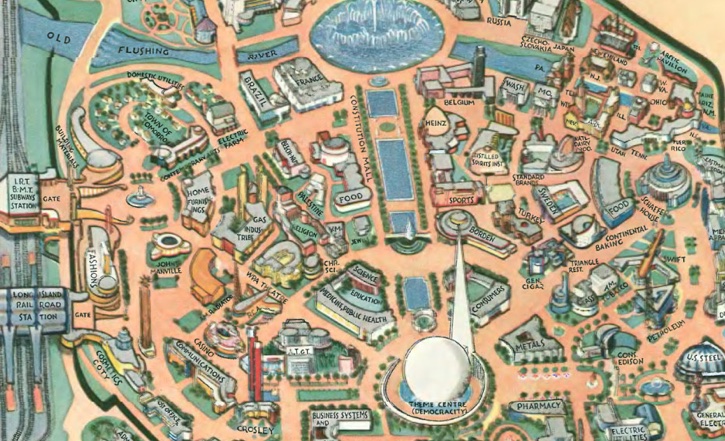
The 1939 New York World’s Fair influence on Disney shows up most clearly in how Disney learned to turn big, complicated concepts into something guests can experience emotionally and visually. The fair took abstract ideas like progress, mobility, and “the world of tomorrow” and made them tangible through architecture, graphics, music, and storytelling. Disney later mastered that same recipe: you don’t just read about a concept, you enter it. You move through it. You remember it.
That’s why the fair isn’t only a historical curiosity for Disney fans. It’s an origin point for the language of theme parks: immersive environments, curated sightlines, kinetic design, and that feeling of being guided through a narrative even when you’re technically “just walking around.” It’s also a reminder that optimism was once a major entertainment product. The fair sold hope, and it did it with showmanship.
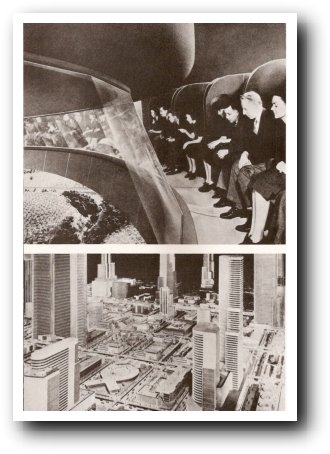
Imperfect and Ambitious
And maybe that’s the most important takeaway today. The fair’s vision of the future was imperfect and selective, but it was also ambitious. Looking back helps us understand where Disney’s future-facing storytelling came from, why it resonated for generations, and what we’ve gained (and lost) as “progress” has shifted from promise to debate. If you want to understand the roots of EPCOT’s original dream and the DNA of modern theme parks, you can’t skip the 1939 New York World’s Fair.