
WorldKey Bit and EPCOT Center
WorldKey Bit was EPCOT Center’s attempt to make “computerized guest service” feel friendly in 1983, back when a lot of people still approached computers with equal parts curiosity and suspicion. In an Eyes & Ears feature dated April 21, 1983, Disney described “Bit” as a lively character built into the WorldKey Information Service, designed to guide guests through information about EPCOT Center’s pavilions, shows, restaurants, shops, and locations. Instead of a cold, monotone machine, Disney sold Bit as a personable voice and face that could “whiz” you through the park’s options with a simple touch. The system itself was an early interactive setup, combining computers, videodiscs, a video display, and a touch-bezel interface, with the option to reach a live attendant by touching the image of the hostess on the screen.
Eyes & Ears Article
Computerized Guest Service
There’s only one “Bit” and the WorldKey Information Service has him. “Bit,” derived from … Bit of Information … is a vivacious and intelligent character, who at the touch of a commanding finger, can whiz guests through various informative programs about every aspect of Epcot Center. Most computers speak in a very monotone and stale voice. But not our “Bit.” “Bit” has a lively and bubbly voice which makes him all the more personable. Epcot Center has taken a new approach to Guest Service … the use of computers. With the help of Bell Laboratories, Disney has provided a concise and easy to use information source for our guests.
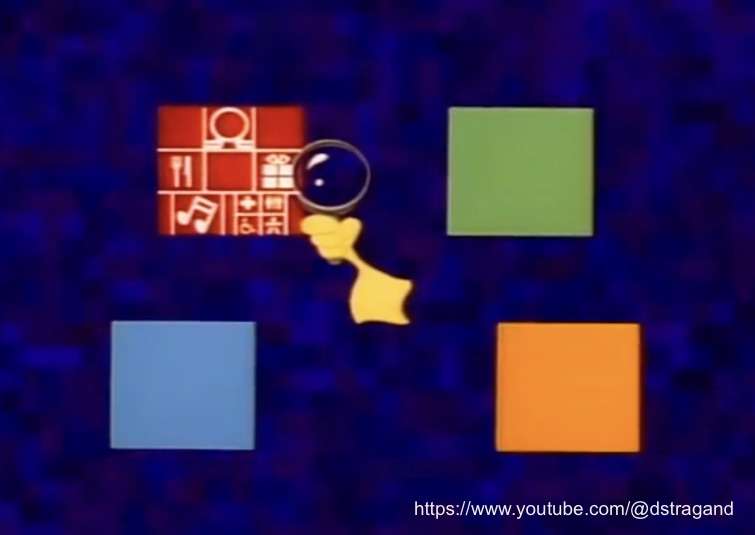
The service is based on the interaction between computers, videodisks, players, and television sets fitted with touch bezel devices. The computer program is the “brains” behind the system, while the videodisk contains artwork depicting the components of Epcot Center … pavilions, shows, restaurants and shops. The bezel on the television recognizes the guest’s touch; this information is in turn read by the computer, which then sends a command to the videodisk player, telling it what should appear next on the screen. Guests are not limited to interacting with the information provided on the videodisk. To receive additional help to questions that might not be answered by the computer system, an attendant is reached simply by touching the hostess picture. You will speak as if standing next to one another. Presently, WorldKey is receiving 1,000-1,500 calls per day through the guest terminals utilizing the “live” attendant.
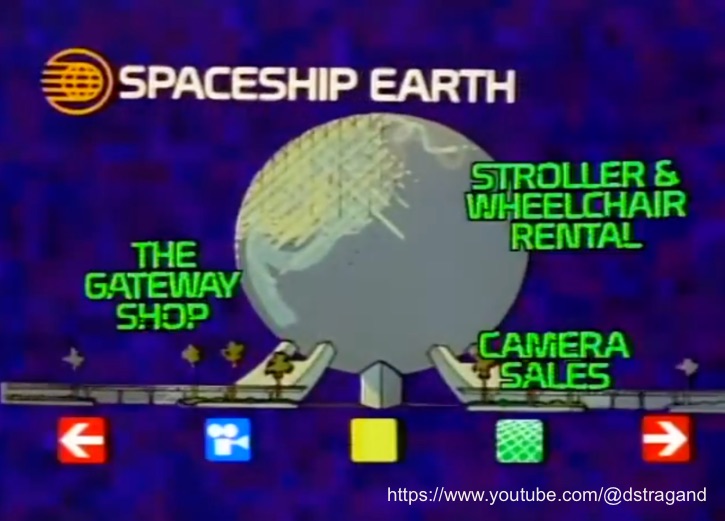
On any one of the 29 terminals located throughout Epcot Center, a guest can select to receive information either in Spanish or English. Once the guest has selected a language preference, the program will be presented in that language. The guests can choose one of four different formats for finding the information they are searching for. The first, a film tour, offers an overview of all the pavilions and their components. More detailed information about a certain pavilion will be obtained just by stopping the tour. The second is offered to guests who are interested in a certain aspect of what is available, such as dining, attractions, shopping or guest services. The third is for those guests wishing only to find where things are located. A map of Future World or World Showcase is presented and by touching a pavilion on the map, a guest will view a brief overview of that pavilion and its components. The fourth is presented in directory form. This is intended to provide detailed information quickly to someone with a specific question. Items are listed alphabetically and by touching a word or phrase, the guest will receive information. For instance, by touching “hot dog,” the guest is given a list of places offering hot dogs. By touching one of the restaurant names, the guest will receive a description of all the types of food served, price ranges, and serving hours.
WorldKey is also taking reservations for all the restaurants in Epcot Center that require one for the evening meal. This process begins as soon as the gates to Epcot Center open and continues until the restaurant is booked or until the restaurants themselves take the reservations over. This usually does not happen until mid-afternoon. During the busy morning hours, all WorldKey terminals in Earth Station are utilized for taking reservations.
There are ten WorldKey Information terminals located in Earth Station, one in FutureCom in West CommuniCore and one in the Bell Systems Lounge. A kiosk with five terminals is located at the bridge from Future World to the Odyssey complex; an identical kiosk is situated on the west side of Showcase Plaza and a third is in front of Germany in World Showcase.
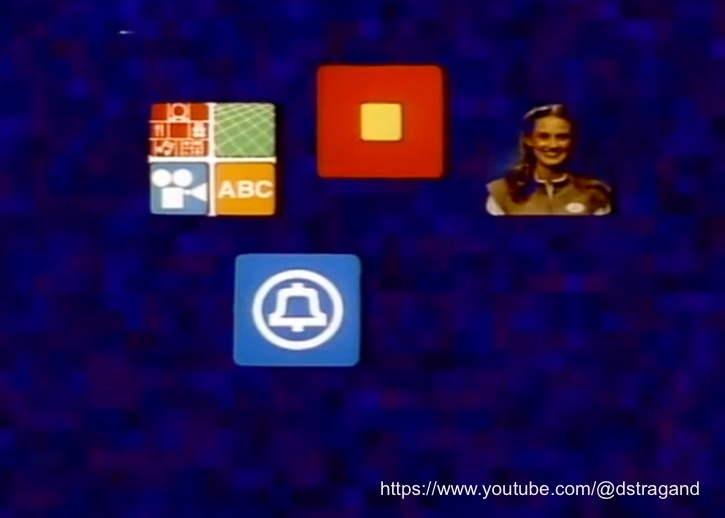
Currently, WorldKey has 35 operators — all of whom speak English and Spanish. Shortly, 11 more operators will be added. Guest reaction to WorldKey has been more than favorable and guests are taking time to utilize the system. WorldKey has the potential to expand to all areas of the property. Besides increasing the availability of information to the guest, it will also present consistent and accurate information property-wide.
Do You Remember Bit?
Reading this Eyes & Ears piece now, WorldKey Bit feels like an early prototype of something we take for granted today. The article describes a system that offered multiple ways to browse information, supported English and Spanish, connected guests to live attendants, and even handled restaurant reservations during the morning rush.
It also provides a rare sense of scale. The publication notes 1,000–1,500 calls per day through guest terminals and describes operators staffing the service, along with terminals and kiosks placed around EPCOT Center. In other words, this was not a novelty tucked in a corner. Disney treated it as a serious guest-service tool, meant to deliver consistent information across the park and potentially expand property-wide. If you ever used WorldKey in the early days, I would love to know what you remember most. Was it the on-screen experience, the “talk to a hostess” feature, or just the thrill of getting help from a computer before “touchscreen” became an everyday word?
WorldKey 1982 Video
Special thanks to David Stragand for posting this amazing video showcasing the system. The artwork is astounding as are the overhead layouts of the attractions and pavilions.
I don’t remember using it myself, but I went there as a kid in 1984 in WorldKey’s prime. I think my older brother was the button-pusher. I think we connected to a hostess and asked about restaurants – you couldn’t make reservations at EPCOT except through the terminals on the day you were there.
The laser discs gave the terminals graphics well beyond what you could get from a computer at the time, but they led to the system’s demise. It was horribly expensive to update the content since it required making new laser discs. When later pavilions were added, they didn’t match the original graphics. It would have been nice if they could have replaced the laser discs with hard drives that could be updated in the later years as storage got cheaper. But by then, the Bell System had been broken up. Bell also planned that the WorldKey system would be something that would spread from EPCOT to public places like malls and airports; but like monorails and PeopleMovers, they never found much interest in the wider world.
Thanks for thew comment! I love how early WDW really jumped on the technology bandwagon and tried a lot of different things.